musée des beaux arts Fabrice
Lauterjung (lyon) |
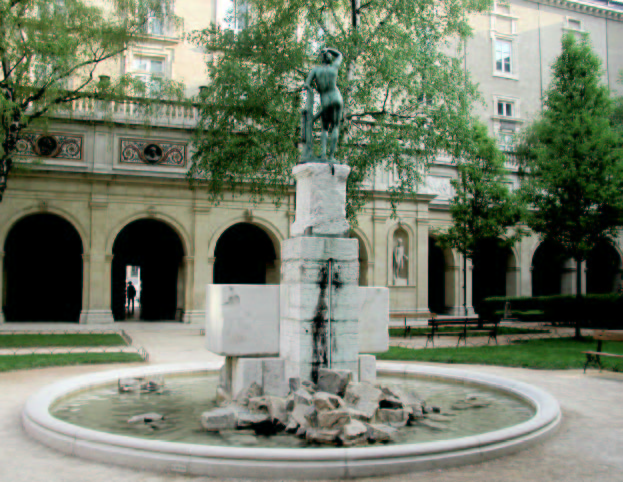 |
Au coeur de la ville, les collections du musée des Beaux-Arts de Lyon comptent parmi les plus importantes d’Europe. L’abbaye royale construite par les bénédictines au XVIIe siecle abrite 70 salles rénovées autour du jardin du cloître, réparties sur 7000 m2 qui forment cinq grands départements. Le département des Antiquités, illustrant plus de trois millénaires d’histoire des grandes civilisations antiques du Bassin méditerranéen. Le département des Objets d’art et le Médaillier mêlent les arts précieux et la sculpture du Moyen-Age à la période Art Déco. Le département des Peintures et celui des Arts graphiques et des Sculptures offrent, un vaste panorama de l’art européen depuis le XIVe siecle jusqu’aux années 1970. |
In the very heart of the town, the collections of Lyon’s Beaux-Arts museum are amongst the most valuable ones in Europe. The royal abbey, built by the Benedictine Order in the 17th century, shelters 70 refurbished halls around the cloister garden, distributed on 7000 sq. m, to form five large departments. The Antiquity department illustrates more than three millenniums of history of the great ancient civilizations in the Mediterranean Basin. The Art Objects Department and the Médaillier (Collection of Medals) put together the precious arts and sculpture of the Middle Ages to the Art Déco period. The Painting, Graphic Arts and Sculpture departments offer a broad overview of European Art ranging from the 14th century up to the 1970’s. |
|
MUSÉE
DES BEAUX ARTS 20, place des Terreaux Palais Saint-Pierre 69001 Lyon France tel. +33 4 72101740 www.lyon.fr |
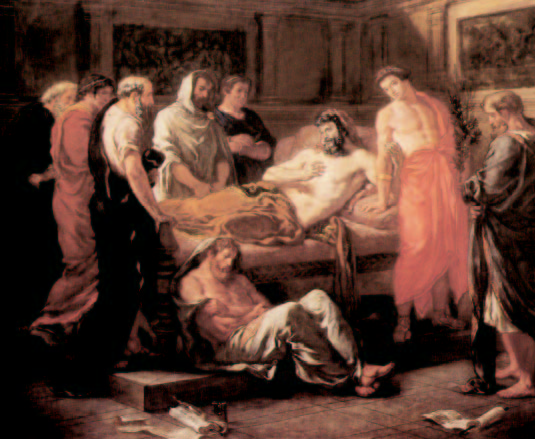 |
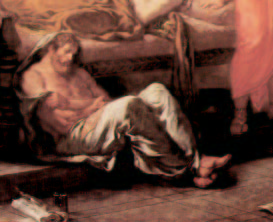
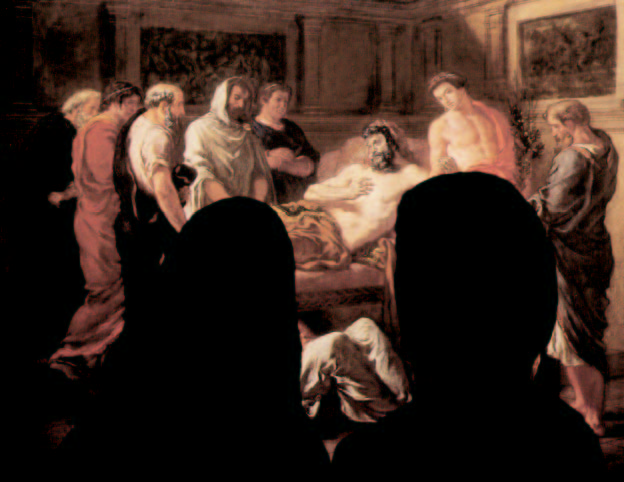
Eugène
Delacroix (1798 – 1863) |
Ce
tableau est exposé au Salon de 1845 accompagné par le texte
suivant: “Les inclinations perverses
The painting Last words of Emperor Marcus Aurelius was exposed
in the 1845 Salon, accompanied |
| Fabrice
Lauterjung Né en / Born in 1978 Il vit et travaille a / He lives and works in Lyon fabtchang@hotmail.com |
Salle
n°18 (Musée des Beaux-Arts de Lyon) / |
Fabrice
Lauterjung travaille le film, la vidéo, le texte. Il a choisi de
produire une pièce au Musée
Fabrice Lauterjung works with film, videotapes,
and texts. He has chosen to create a play at the Musée des Beaux
arts de Lyon and – more particularly – because of the presence
of two works of the collection: “Dernieres paroles de l’empereur
Marc Aurele” (Last words of Emperor Marcus Estelle Nabeyrat |
|
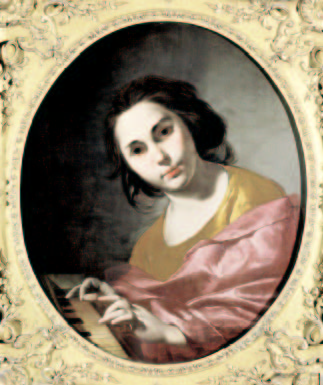 |
Bernardo
Cavallino (1616 – 1655) |
Les
œuvres de Bernardo Cavallino, artiste sensible, sont rares dans les
collections publiques françaises. Son art, relativement isolé,
se rapproche par ses sujets de la sensibilité des poètes
et des prosateurs. Ceci lui amena une importante clientèle de collectionneurs
privés pour lesquels il exécuta des œuvres précieuses,
aux formats réduits, qui préfigurent souvent la grâce
et le charme de la peinture du XVIII siècle.
The works of Bernardo Cavallino, a very sensitive artist, are rare in
the public collections of France. |
| Noga
Inbar Née à / Born in Milan, 1984 Elle vit et travaille à / She lives and works in Milan nogina1984@yahoo.co.uk |
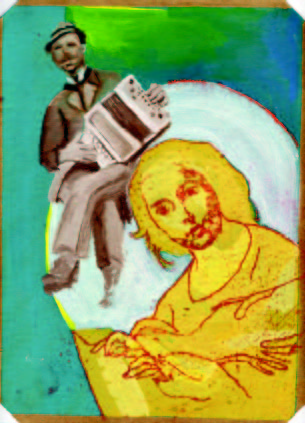
Riflessioni
sulla Suonatrice di clavicordo, |
Noga
Inbar est née à Milan, d’une famille d’Europe
Centrale. Elle est fascinée par les photos anciennes, qui paraissent
sur ses toiles à coté de la peinture: des dimensions physiques
et mentales, distantes par nature, trouvent une coexistence sans volonté
narrative consciente. Noga veut activer le passé, en parler au
présent, faisant face à sa décomposition et éveillant
sa mémoire.
Noga
Inbar was born in Milan, from a Central European family. She is fascinated
by old photographs, Marco Tagliafierro |
|
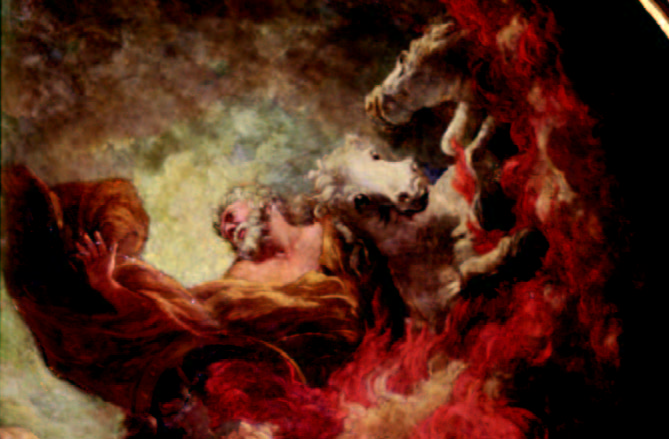 |
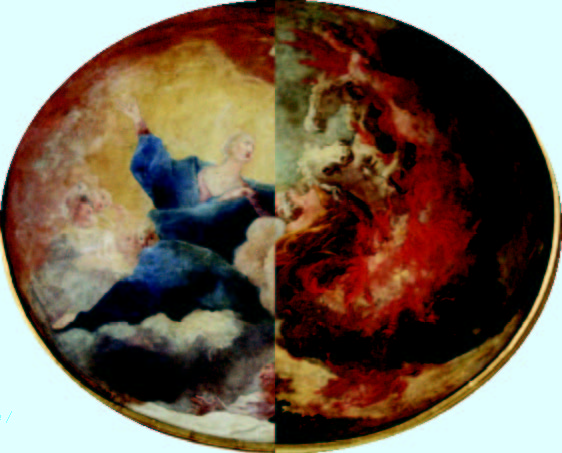
Pierre-Louis
Cretey |
Un
décor peint confié à Pierre-Louis Cretey régnait
sur les côtés et sur la voûte du réfectoire
baroque
Painted decoration attributed to Pierre-Pouis Cretey, covers the angles
and the vault of the baroque |
| Leo
Vikelic Né à / Born in Zagreb, 1972 Il vit et travaille à / He lives and works in Zagreb lvukelic@hotmail.com |
Fresco
Reprint , 2004 |
Les
oeuvres de Leo Vukelic explorent les relations fragiles entre l’esthétique
et la technologie. Et The works by Leo Vukelic explore the fragile relationships between aesthetics and technology. And while the aesthetics in art very often remains in the categories of tradition and past, technologies belong to the present day and to the future. In an unconventional manner the artist employs the media of performance, print, video or object. Exploring the traditional graphic art medium the author employs all presently available ways of digital processing of images. The visual pattern of these graphics was taken from the uncontrolled multitude of images which pass in front of our eyes. In some cases the visual pattern was taken from the history of art, and in this case it was a series of landscapes from the collection of the museum in Lyon. The artist deconstructs the ready pattern of a traditionally “beautiful” picture. The newly formed work is not canceling the traditional forms and shapes, it is a meticulous analysis of painting methods which treats the visual arts tradition with respect. Darko Simicic |
|