Eleos
Eleos
ELEOS – Un grido per l’umanità di Marco Cocciola
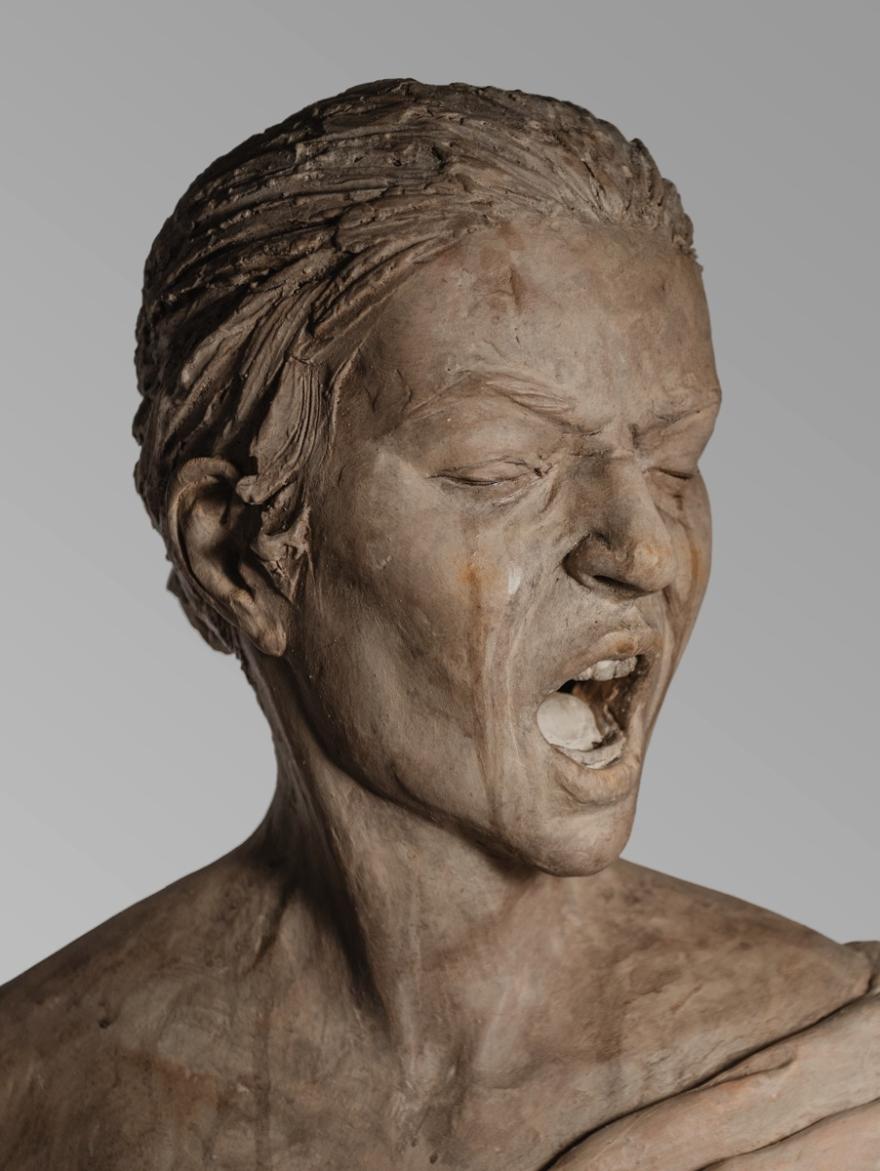
In greco ELEOS non può essere definito in modo esauriente, ma si può tradurre con i termini di misericordia e compassione per rappresentare il sentimento di solidarietà fra le persone - ma anche tra le divinità e le persone -, e per indicare un valore imprescindibile per la dimensione religiosa dell’uomo, perché senza compassione non c’è religione, e per alcuni nemmeno umanità. ELEOS è in sintesi il legame tra il sentimento di compassione e l’azione benefica che esprime la concretezza della misericordia quale banco di prova della nostra intelligenza della vita. ELEOS, che mi pregio di presentare, è anche il titolo che abbiamo dato a questa straordinaria esposizione dedicata al tema attuale e bruciante delle guerre, della migrazione e della condizione alienante del rifugiato; una mostra che è il frutto di una prima fase di un rapporto umano e dialettico che si è instaurato con l’artista Alberto Criscione, ma anche una visione fuori campo che rilegge il ruolo del gallerista – prima, durante e dopo il processo di creazione artistica - come punto di riferimento e confronto culturale, e come connettore tra collezionisti, appassionati e artisti, indipendentemente dall’atto di acquisizione finale o di destinazione delle opere; da qui, da questo confronto, Criscione ha sentito nascere dentro di sé l’ispirazione e l’impulso necessari per creare ex-novo le opere che compongono ELEOS; un’esigenza irrinunciabile e prorompente per entrare in contatto con tutte le vittime di queste terribili guerre in Medio Oriente e in Ucraina, e per lasciare spazio alla ragionevolezza, stimolando la coscienza di ognuno di noi. In questa mostra - che diverrà itinerante - l’arte di Alberto Criscione rinnova ed esprime il suo grido di dolore e di denuncia con intensa e profonda umanità, lasciando parlare le figure che animano questo gruppo scultoreo, nelle quali la presenza di bambini, cui tutto viene sottratto, lascia un segno indelebile; è un’accusa diretta contro una distruzione pensata, voluta e organizzata da uomini contro altri uomini, una tragedia espressa in urla, abbracci estremi, mani che coprono volti lacerati o tese fino allo spasimo per aggrapparsi, per tentare di non soccombere, per chiedere aiuto, misericordia, accoglienza, libertà, amore. Le opere di Criscione ci conducono a riflettere sull’atrocità delle sofferenze, dei traumi fisici, psicologici e sociali che intere popolazioni sono costrette a subire a causa dei conflitti che si scatenano nei loro territori, nelle loro città ridotte a cumuli di terra e macerie, spazzate via insieme alla loro vita quotidiana, alla loro identità, alla loro esistenza. Sono sculture che feriscono come fendenti, ma sono queste ferite che ci permettono di penetrare nei recessi del nostro cuore e ci rendono capaci di compassione. Strazio, sradicamento, abbandono, perdita della propria identità, ma anche accoglienza e fiducia in un futuro migliore sono solo alcune delle sensazioni che suscitano in maniera vibrante le opere di questo artista silenzioso e profondo, le cui figure potenti ci proiettano immediatamente vicino alle vittime di queste tragedie, facendocele visualizzare. Ho seguito passo passo la realizzazione di questo imponente ciclo scultoreo e, osservando Alberto lavorare, ho compreso che la sua è anche una ricerca, è il bisogno di raggiungere una forma che a un certo momento gli soddisfi lo spirito. Per i greci la bellezza assoluta, quella non soggettiva, dipendeva dall’armonia delle parti con l’insieme. Non intendevano creare sculture somiglianti a uomini e donne reali, ma corpi perfetti nelle proporzioni e idealizzati, lui, invece, pur partendo dal modello classico e rispettando i canoni sull’armonia e la proporzione, privilegia il registro dell’espressività. La sua formazione culturale, il bisogno di guardare alla realtà circostante con occhio lucido, rifiutando i vecchi linguaggi retorici, gli fa compiere una vera e propria indagine antropologica. Ci sono pochi artisti contemporanei dei quali si potrebbe parlare così a lungo come di Criscione, e ci sono poche opere delle quali si può anche dire poco come le opere del ciclo ELEOS, perché parlano già da sole, perché sono esse stesse il racconto vero e la spiegazione più appropriata dell’arte figurativa di Criscione; per lui la scultura è una cosa seria, è un processo vitale che ha solide basi nell’insegnamento dei grandi maestri del passato e nelle tecniche che ha imparato a conoscere fino alla perfezione. Da figlio d’arte, discendente di un eminente artigiano e presepista conosciuto in ambito internazionale, è diventato sia uno straordinario artista che un bravissimo artigiano che conosce tutti i mezzi dell’arte figurativa di ieri e di oggi, e da bravo, serio e diligente artigiano che ha iniziato in bottega, ha un rapporto vero con la materia che usa per realizzare un bozzetto o un’opera finita, tante volte cosi dolorosamente perfetta da lasciare lo spettatore senza respiro. Il suo rapporto privilegiato con la tecnica ci racconta della sua totale dedizione all’arte figurativa, in cui - con apparente semplicità di linguaggio - riesce a trattare temi e soggetti dei quali non siamo più abituati a parlare, dei quali portiamo dentro ricordi che non trovano più il nesso con la nostra quotidianità dove tutto scorre, dove tutto ci sfugge, dove tutto e niente si muove, dove è tutto in funzione di... L’argilla è la materia preferita da Alberto, quella che traduce meglio l’immediatezza del suo gesto artistico, e in questo lavoro egli ci mostra la propria abilità nel rendere l’espressione e la fisionomia dei soggetti con enorme realismo, lasciando alcune parti solo abbozzate. In ELEOS egli supera l’angustia della fedeltà ai soli particolari e dà voce poetica al vero, appropriandosi degli spunti offertigli da un’osservazione commossa e partecipata del dramma di queste popolazioni in guerra. Le sue figure in terracotta, erette sulle nude tavole di legno da cantiere, sembrano entrare in dialogo con i capolavori dei veristi di fine ‘800, e in questo lavoro Criscione ritrova le linee portanti della sua ricerca ventennale, fatta anche di impegno contro le guerre e la feroce inutilità della violenza. Queste opere rappresentano una sorta di indagine sociologica per immagini, e ci offrono uno sguardo sull’individuo, sull’umanità che vive intorno a noi e che è reale. L’opera di Criscione riporta alla memoria una bellezza perduta nelle difficoltà del quotidiano, di una vita ai margini, e allora le sue figure ci mostrano la grazia e la verità delle cose arcaiche, ma anche la sofferenza e i tormenti di ognuno di noi. La modernità della sua arte si gioca proprio sul crinale di questo patimento, che spezza un transitorio idillio e apre il sipario sulla reale esistenza, sulle sue complicazioni. Il realismo di Criscione è appassionato, coinvolgente, è posato sulla pelle, è vissuto come una sequela di emozioni che si fanno materia, che plasmano le forme del quotidiano. Il suo stile è obiettivo, fornisce una visione non manipolata della realtà, e la sua perizia esecutiva produce risultati di grande spontaneità espressiva, vivacemente bozzettistica, seppure di tono talvolta vagamente manieristico; la sua arte rifugge i pericoli di un virtuosismo di maniera per privilegiare il registro dell’espressività, della verità, e il bisogno di guardare alla realtà concreta circostante con occhio lucido e spregiudicato – che rifiuta lo schermo delle vecchie retoriche - gli fa compiere un vero e proprio cambiamento nella scultura contemporanea. In queste statue la pelle sembra proprio pelle, i volti non sono idealizzati ma modellati con attenzione per riprodurre le imperfezioni che restituiscono il naturalismo della scultura; l’espressione, gli abiti spiegazzati, tutto evidenzia lo straordinario talento di Criscione. Le sue sculture sono proporzionate ma non equilibrate e calme, perché - come tutti gli uomini nelle varie situazioni che si trovano ad affrontare - cambiano espressioni; le superfici sono graffiate, scavate, mosse, le luci sbattono sui risalti, le ombre si addensano nelle rientranze, diventano inquiete, drammatiche, vivono negli sguardi, nelle riflessioni di chi osserva, e dimostrano la sensuale potenza di un artista contemporaneo che descrive l’oggi, quello che stiamo vivendo. La scultura di Criscione appare più vera del vero e ne fa uno degli scultori italiani più interessanti e impegnati, un artista che ha unito in modo assai particolare - e con esiti sorprendenti - l’osservazione del dato reale all’assimilazione e la riproposizione dei modelli plastici, divenendo portavoce di una nuova corrente verista. Criscione dunque modella il vero. Personalmente, tutte le volte che mi sono trovato di fronte alle opere di ELEOS ho pensato a Didier, un giovane emigrato che ho conosciuto tempo fa in un treno per Bologna; era stato preso di mira dal controllore che aveva attraversato il vagone, superando me e le altre persone sedute, e si era fermato tre, quattro file più avanti per chiedergli il biglietto. I toni che aveva utilizzato erano aspri ma Didier, pur avendolo guardato con indignazione, non aveva dato seguito alla collera. I suoi tratti erano gentili, gli occhi buoni, l’abbigliamento quello di uno studente universitario: mocassini, jeans e una polo blu a maniche corte, tipo Lacoste. Dimostrava sì e no venticinque anni. Con un libro ancora tra le mani, con garbo e senza alcun tremore nella voce, aveva invitato il controllore a chiedere il biglietto anche agli altri passeggeri. Chi aveva assistito alla scena era rimasto indifferente. Tutti, tranne me. L’indignazione del giovane era diventata la mia, e non sono riuscito a non assecondarla, a trattenermi, a restare calmo. Non potevo rimanere inerte di fronte a quello che stava accadendo, perché mi sarei sentito colpevole. Dopo che il controllore è andato via Didier mi ha raccontato la sua storia. Parlava l’italiano correntemente e si era da poco laureato in ingegneria. Aveva lasciato l’Africa su un barcone circa 10 anni fa per una guerra incombente nel suo paese d’origine in cui aveva perso il padre e il fratello più piccolo, e aveva trovato rifugio in Italia presso una coppia di anziani medici milanesi che gli hanno voluto bene come un figlio. In ogni dettaglio di cui generosamente Didier mi ha fatto dono, c’è la vita che ricomincia, la fede che sostiene, la memoria che pesa ma dalla quale non si può prescindere, l’umanità che oltraggia la dignità e quella che invece si riscatta, la speranza che rifiorisce ostinatamente e instancabilmente. C’è la lotta. Ecco, ELEOS è questo: è lotta, è un’opera portatrice di un male profondo e radicato che in ogni singola figura si ribella e raggiunge vette di grandissima forza espressiva ed emotiva; ELEOS è una parte di noi di cui ci siamo mutilati che ci perseguita, perché ogni ferita delle persone che vivono oggi l’orrore della guerra è una nostra responsabilità, e diventa una nostra angoscia. Ogni gesto sconsiderato compiuto oggi dalle popolazioni in guerra, dai governi, è un nostro gesto. Di questi ultimi conflitti - quello in Palestina e in Ucraina, a esempio - siamo la causa principale, e il nostro modo distratto e compulsivo di vivere (la solitudine delle relazioni e l’indifferenza verso il nostro destino e quello altrui) l’alimenta e lo soffoca. Ma ELEOS è anche altro, è un emozionante itinerario che permette al visitatore di arrivare a comprendere l’intimità artistica dello scultore, perché entrare in galleria, o dove verranno esposte queste opere, significherà dare inizio a un viaggio scandito dalle immagini alla scoperta del mondo di un artista fuori dal tempo e dagli schemi commerciali, per il quale la scultura è vocazione totalizzante, che colpisce per la forza espressiva, con l’incontenibilità di un fiume in piena. In questa mostra in cui si respira l’essenza di un artista che ha trasformato il dolore in bellezza, Alberto - con il suo impegno - invoca adesso il nostro abbraccio, un gesto di solidarietà affinché siano le nostre mani a tendersi per prendere le mani di chi ha bisogno, di chi si sente abbandonato. Alberto Criscione è insomma un narratore di storie, un testimone del suo tempo che ci invita a guardare il mondo con occhi nuovi, a trovare la speranza anche nell’oscurità, e io non posso che ringraziarlo.
ELEOS – A cry for humanity by Marco Cocciola
In Greek ELEOS cannot be defined exhaustively, but it can be translated with the terms of mercy and compassion to represent the feeling of solidarity between people, but also between divinities and people - and to indicate an essential value for the dimension religion of man, because without compassion there is no religion, and for some not even humanity. ELEOS is in short the link between the feeling of compassion and the beneficial action that expresses the concreteness of mercy as a test of our intelligence of life. ELEOS, which I have the honor to present, is also the title we have given to this extraordinary exhibition dedicated to the current and burning theme of wars, migration and the alienating condition of the refugee; an exhibition which is the fruit of a first phase of a relationship human and dialectical that was established with the artist Alberto Criscione, but also an off-field vision, which reinterprets the role of the gallery owner - before, during and after the process of artistic creation - as a point of reference and cultural comparison, and as a connector between collectors, enthusiasts and artists, regardless of the final acquisition or destination of the works; from here, from this comparison, Criscione felt the inspiration and impulse necessary to create the works that make up ELEOS from scratch; an indispensable and pressing need to get in touch with all the victims of these terrible wars in the Middle East and Ukraine, to leave room for reasonableness, stimulating the conscience of each of us. In this exhibition - which will become itinerant - the art of Alberto Criscione renews and expresses his cry of pain and denunciation, with intense and profound humanity, letting the figures that animate this sculptural group speak, in which the presence of children, whose everything is taken away, it leaves an indelible mark; it is a direct accusation against a destruction conceived, desired and organized by men against other men, a tragedy expressed in screams, extreme embraces, hands covering lacerated faces or tense to the point of clinging, to try not to succumb, to ask for help , mercy, welcome, freedom, love. Criscione’s works lead us to reflect on the atrocity of the suffering, the physical, psychological and social traumas that entire populations are forced to suffer due to the conflicts that break out in their territories, in their cities reduced to piles of earth and rubble, swept away, together with their daily life, their identity, their existence. They are sculptures that wound like blows, but it is these wounds that allow us to penetrate the recesses of our heart and make us capable of compassion. Heartbreak, uprooting, abandonment, loss of one’s identity, but also acceptance and trust in a better future are just some of the sensations that the works of this silent and profound artist vibrantly arouse, whose powerful figures project us immediately close to the victims of these tragedies, making us visualize them. I followed the creation of this imposing sculptural cycle step by step and, observing Alberto work, I understood that his is also a search, it is the need to achieve a form that at a certain moment satisfies his spirit. For the Greeks, absolute beauty, the non-subjective one, depended on the harmony of the parts with the whole. They did not intend to create sculptures resembling real men and women, but bodies perfect in proportions and idealised; he, however, although starting from the classical model and respecting the canons of harmony and proportion, favors the register of expressiveness. His cultural training, the need to look at the surrounding reality with a clear eye, rejecting the old rhetorical languages, makes him carry out a real anthropological investigation. There are few contemporary artists about whom one could talk as long as Criscione, and there are few works about which one can even say as little as the works of the ELEOS cycle, because they already speak for themselves, because they are themselves the true and the most appropriate explanation of Criscione’s figurative art; for him sculpture is a serious thing, it is a vital process that has solid foundations in the teaching of the great masters of the past and in the techniques that he has learned to know to perfection. From being a son of art, a descendant of an eminent craftsman and nativity maker known internationally, he has become both an extraordinary artist and a very good craftsman who knows all the means of figurative art of yesterday and today, and as a good, serious, and a diligent craftsman who started in the workshop, he has a true relationship with the material he uses to create a sketch or a finished work, often so painfully perfect as to leave the spectator breathless. His privileged relationship with technique tells us of his total dedication to figurative art, in which - with apparent simplicity of language - he manages to deal with themes and subjects that we are no longer used to talking about, of which we carry memories that cannot be found plus the connection with our daily life where everything flows, where everything escapes us, where everything and nothing moves, where everything is a function of... Clay is Alberto’s favorite material, the one that best translates the immediacy of his artistic gesture, and in this work he shows us his ability to render the expression and physiognomy of the subjects with enormous realism, leaving some parts only sketched. In ELEOS he overcomes the narrowness of faithfulness to details alone and gives poetic voice to the truth, appropriating the ideas offered to him by a moving and shared observation of the drama of these populations at war. His terracotta figures, erected on bare wooden construction site boards, seem to enter into dialogue with the masterpieces of the realists of the late 19th century, and in this work Criscione finds the main lines of his twenty-year research, also made up of commitment against wars and the ferocious futility of violence. These works represent a sort of sociological investigation through images, and offer us a look at the individual, at the humanity that lives around us and which is real. Criscione’s work brings to mind a beauty lost in the difficulties of everyday life, of a life on the margins, and then his figures show us the grace and truth of archaic things, but also the suffering and torment of each of us. The modernity of his art is played out precisely on the ridge of this suffering, which breaks a transitory idyll and opens the curtain on real existence, on its complications. Criscione’s realism is passionate, engaging, it is placed on the skin, it is experienced as a sequence of emotions that become material, that shape the forms of everyday life. His style is objective, it provides an unmanipulated vision of reality, and his executive expertise produces results of great expressive spontaneity, lively sketch-like, albeit sometimes vaguely manneristic in tone; his art avoids the dangers of a virtuosity of manner to favor the register of expressiveness, of truth, and the need to look at the surrounding concrete reality with a clear and unscrupulous eye - which rejects the screen of old rhetoric - makes him accomplish a true and a real change in contemporary sculpture. In these statues the skin really looks like skin, the faces are not idealized but carefully modeled to reproduce the imperfections that restore the naturalism of the sculpture; the expression, the wrinkled clothes, everything highlights Criscione’s extraordinary talent. His sculptures are proportionate but not balanced and calm, because - like all men in the various situations they face - they change expressions; the surfaces are scratched, dug, moved, the lights hit the projections, the shadows thicken in the recesses, they become restless, dramatic, they live in the gazes, in the reflections of those who observe, and demonstrate the sensual power of a contemporary artist who describes the today, what we are experiencing. Criscione’s sculpture appears truer than life and makes him one of the most interesting and committed Italian sculptors, an artist who has combined in a very particular way - and with surprising results - the observation of real data with the assimilation and re-proposal of models plastics, becoming spokesperson for a new realist current. Criscione therefore models the truth. Personally, every time I found myself in front of ELEOS’s works I thought of Didier, a young emigrant who I met some time ago on a train to Bologna; he had been targeted by the conductor who had crossed the carriage, passing me and the other people sitting and had stopped three, four rows ahead to ask him for a ticket. The tones he had used were harsh but Didier, despite having looked at him with indignation, had not followed through on his anger. His features were kind, his eyes kind, his clothing that of a university student: moccasins, jeans and a blue polo shirt with short sleeves, like Lacoste. He looked about twenty-five years old. With a book still in his hands, politely and without any tremor in his voice, he invited the conductor to ask the other passengers for tickets too. Those who witnessed the scene remained indifferent. Everyone, except me. The young man’s indignation had become mine, and I was unable not to indulge it, to contain myself, to remain calm. I couldn’t remain inert in the face of what was happening, because I would have felt guilty. After the conductor left Didier told me his story. He spoke Italian fluently and had recently graduated in engineering. He had left Africa on a boat about 10 years ago due to a looming war in his home country in which he had lost his father and younger brother, and had found refuge in Italy with a couple of elderly Milanese doctors who gave him loved like a son. In every detail that Didier generously gave me, there is life that begins again, faith that supports, memory that weighs but which cannot be ignored, humanity that outrages dignity and that which instead redeems itself. , the hope that stubbornly and tirelessly flourishes again. There is the fight. Here, ELEOS is this: it is a struggle, it is a work that bears a deep and rooted evil that in every single figure rebels and reaches heights of great expressive and emotional strength; ELEOS is a part of us that we have mutilated that haunts us, because every wound of the people who live the horror of war today is our responsibility, and becomes our anguish. Every reckless gesture made today by populations at war, by governments, is our gesture. We are the main cause of these latest conflicts - those in Palestine and Ukraine, for example - and our distracted and compulsive way of living (the loneliness of relationships and indifference towards our destiny and that of others) fuels it and suffocates him. But ELEOS is also something else, it is an exciting itinerary that allows the visitor to understand the artistic intimacy of the sculptor, because entering the gallery, or where these works will be exhibited, will mean starting a journey punctuated by images to discover the world of an artist outside of time and commercial patterns, for whom sculpture is an all-encompassing vocation, striking for its expressive strength, with the uncontainability of a river in flood. In this exhibition in which you can breathe the essence of an artist who transformed pain into beauty, Alberto - with his commitment - now invokes our embrace, a gesture of solidarity so that our hands reach out to take the hands of those in need, those who feel abandoned. In short, Alberto Criscione is a storyteller, a witness of his time who invites us to look at the world with new eyes, to find hope even in the darkness, and I can only thank him.